How Snaptikk.io Removes Watermarks from TikToks
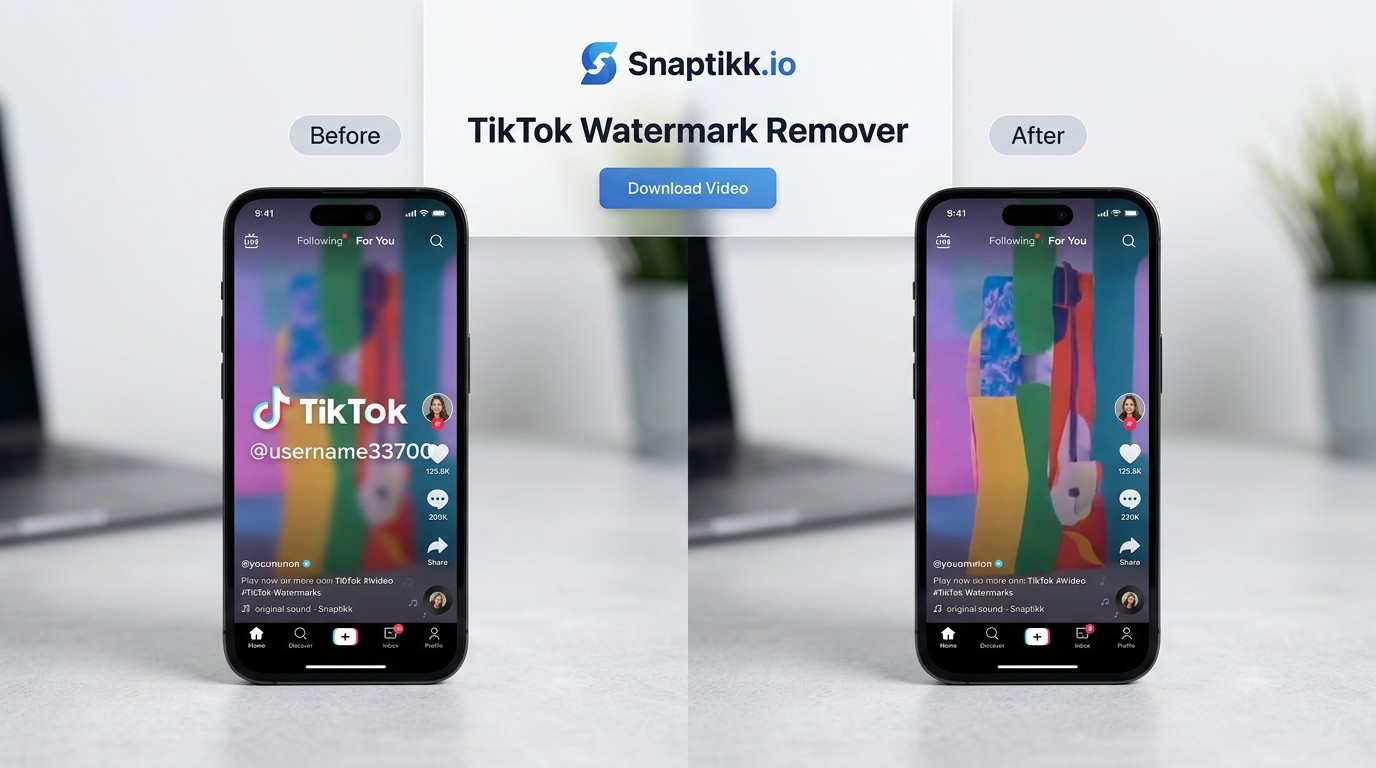
TikTok has become a major platform for short form video, with creators publishing content across entertainment, education, business, travel, technology, cooking, and many other categories. As users save videos for offline viewing or creative research, the visual presentation of those files can become an important consideration. Watermarks and platform identifiers can affect how a saved video appears outside the original TikTok environment.
For users looking for a browser based way to process TikTok content, Snaptikk.io provides a simple workflow centered around TikTok URLs. Users can access the service through a compatible web browser without necessarily installing a dedicated application. This makes the process accessible across smartphones, tablets, laptops, and desktop computers.
Understanding TikTok Watermarks
A TikTok watermark is a visual identifier associated with content shared through the platform.
It can include elements such as the TikTok logo, creator information, or other platform related markings. Depending on the video and how it is saved or shared, these elements may appear in different locations.
Watermarks can help identify the source of content, which is useful for attribution and platform recognition.
When users want a cleaner looking file for personal reference, they may look for downloading methods that provide media without the same visual overlays.
How Snaptikk.io Removes Watermarks
The phrase How Snaptikk.io Removes Watermarks describes the process of obtaining a TikTok video through a browser based downloader that may provide a version without certain platform related visual elements.
Users begin by locating an accessible TikTok video and copying its URL. They can then enter the URL into Snaptikk.io.
The service processes the supplied link according to its current capabilities and may provide an available download option.
The exact output can depend on the source video and the current functionality of the service, so users should review the interface when processing a particular video.
Why Users Want Watermark Free Videos
There are several reasons users may prefer a cleaner visual presentation.
A creator researching video composition may want to focus on framing, transitions, captions, and other visual details without platform overlays distracting from the footage.
A viewer saving a tutorial for offline reference may also prefer a straightforward presentation.
These use cases do not automatically give users permission to republish the underlying content.
Starting With a TikTok Video Link
The process begins with the source video.
Users can locate a TikTok post and use the platform's sharing options to copy its URL.
The copied address serves as the input for a browser based downloader.
Checking that the complete link has been copied correctly can help avoid processing problems.
Once the URL is available, users can open the downloader and enter it into the appropriate field.
Browser Based Watermark Removal
A browser based workflow can be convenient because it does not necessarily require additional software.
Users can access the service from a compatible browser whenever they need to process a TikTok link.
This can be particularly useful for people who occasionally save videos and do not want to maintain another application on their device.
Browser based access also allows the same general workflow to be used across different operating systems.
Mobile Use
Many TikTok users browse and discover content through smartphones.
Android and iPhone users can copy a TikTok link and open a mobile browser to access the downloader.
The resulting file can then be handled through the device's normal download and file management tools.
The exact location of saved media can vary depending on the operating system, browser, and device configuration.
Desktop Use
Desktop computers can provide additional flexibility when managing downloaded TikTok videos.
Users can create dedicated folders, rename files, review multiple references, and transfer content to other storage locations.
Creators conducting research may find it easier to analyze several videos on a larger display.
A browser based tool can therefore fit into both mobile and desktop workflows.
Video Quality After Downloading
Removing a watermark and maintaining useful video quality are separate considerations.
Users may want a clean file that still contains sufficient detail for its intended purpose.
For casual offline viewing, standard quality may be sufficient.
For research involving captions, transitions, framing, or editing techniques, greater visual detail may be more useful.
File size should also be considered because higher quality media can consume more storage.
Watermarks and Original Content
A watermark is only one part of a TikTok video.
The underlying footage may still belong to the original creator or another rights holder.
Removing a visual identifier does not change who owns the content.
Users should therefore treat watermark removal as a presentation or downloading issue rather than as a transfer of copyright ownership.
Video Link Processing
A direct video link provides a simple starting point for the workflow.
Instead of searching for the same content inside a separate database, users can process the specific TikTok URL they have already identified.
This can make the process more convenient for individual videos and selected research references.
Users should verify that the link points to the intended source before processing it.
Offline Viewing
One common reason for saving TikTok videos is offline access.
A local copy can make it easier to revisit a tutorial, recipe, educational explanation, or other useful reference without repeatedly searching for the original post.
Offline viewing can also be useful when internet connectivity is limited.
However, having a local copy does not automatically authorize public sharing or commercial reuse.
Content Research
Creators can use saved videos as references when researching short form content.
A video may demonstrate an effective opening hook, unusual camera angle, strong storytelling structure, or creative editing technique.
A watermark free presentation can sometimes make visual analysis easier.
The purpose of this research should be to understand techniques and develop original content rather than reproduce another creator's footage.
Editing Research
Downloaded TikTok videos can also be useful for studying editing approaches.
Creators may examine transitions, scene duration, caption placement, pacing, sound changes, and visual composition.
A clean presentation can make certain details easier to inspect.
If third party footage is intended to be incorporated into an actual published project, users should first consider copyright and permission requirements.
Copyright Considerations
TikTok videos can be protected by copyright.
A creator may own the video, while music, photographs, graphics, logos, or other elements within the content can involve additional rights.
Downloading a video through a browser based service does not automatically provide permission to publish or distribute it.
Users should distinguish between personal reference and public or commercial use.
Responsible Use of Watermark Free Videos
A watermark free file can look different from the original platform presentation, but that does not change the rights associated with the content.
Users should avoid treating a clean looking file as free to use material.
If a video is intended for reposting, advertising, monetization, or another public project, users should determine whether appropriate permission or licensing is available.
Keeping information about the original creator can also help preserve source context.
Keeping Track of Sources
Users who save many TikTok videos can benefit from maintaining source information.
The original URL, creator username, topic, and date can be recorded in a spreadsheet or notes file.
This makes it easier to locate the source later.
Source tracking is particularly helpful for creators who may want to contact a creator for permission or collaboration.
Storage Management
Watermark free TikTok videos can still require significant storage space.
Users should periodically review their downloaded files and remove duplicates or references that are no longer useful.
Important research material can be moved to suitable external or cloud storage when appropriate.
Organizing files into topic based folders can also make a growing collection easier to manage.
Mobile Storage Considerations
Smartphone storage can become limited quickly when users save videos regularly.
Android and iPhone users can check their available storage and remove unnecessary files periodically.
Videos that are no longer needed can be deleted, while important references can be transferred to another appropriate storage location.
A selective downloading routine can prevent unnecessary storage consumption.
Desktop File Organization
Desktop users have more flexibility for creating structured media libraries.
Folders can be organized by project, topic, creator, or research category.
Descriptive filenames can also make it easier to identify a video without opening it.
For professional workflows, separating third party research references from original project assets can reduce confusion.
Browser Compatibility
Browser compatibility can affect the downloading experience.
Modern browsers such as Chrome, Edge, Firefox, and Safari may handle downloads differently depending on the device and operating system.
If a video does not process correctly, users can verify the URL, check that the source remains available, refresh the page, or try another current browser.
Keeping the browser updated can also help maintain compatibility with modern web services.
Internet Connection
Network conditions can influence processing and download speed.
A stable connection generally provides a more consistent experience than an interrupted or weak network.
Mobile users should consider cellular data usage when downloading multiple videos.
For larger files, a suitable Wi Fi connection may be more practical.
Privacy and Security
Users should maintain sensible online safety practices when using browser based downloaders.
They should be cautious about unexpected redirects, unfamiliar prompts, or requests for unnecessary personal information.
Keeping the browser and operating system updated is also useful.
Downloaded files should be reviewed and stored appropriately, especially when the device contains sensitive personal or professional information.
Avoiding Unnecessary Downloads
Not every TikTok video needs to be saved.
Users can consider the purpose of each download before processing a link.
Saving only useful references helps reduce storage consumption and keeps the media library easier to manage.
This approach is especially helpful for creators who collect videos for ongoing research.
Common Processing Issues
A TikTok video may not always process successfully.
The original post could be unavailable, the URL may be incorrect, or temporary network or browser problems may interfere with the workflow.
Users can verify the original TikTok page, copy the link again, refresh the browser, and check available storage.
Trying another compatible browser may also help identify whether the issue is device specific.
Cross Device Workflows
A browser based downloader can support users who work across multiple devices.
A video may be discovered on a smartphone, processed through a mobile browser, and later organized on a laptop or desktop.
This approach can be useful for creators who separate content discovery from research and file management.
Standard transfer methods can be used to move authorized media between devices.
Getting Started With Snaptikk.io
Users interested in How Snaptikk.io Removes Watermarks can begin by selecting an accessible TikTok video and copying its URL.
They can then open Snaptikk.io in a compatible browser and enter the video link into the available interface.
After the link is processed, users can follow the current download options provided by the service.
The resulting file can then be organized according to its intended purpose. Whether used for offline viewing, personal reference, or creative research, users should remember that removing a watermark does not transfer ownership or automatically grant permission to reuse the original TikTok content.